

Sustainability
Good materials, honestly made
We work to 17 principles for responsible production, across raw materials, production and lifecycle: not as a marketing claim, but as the standard we keep checking our own work against.
We think good materials and honest production shouldn't be a marketing claim. They should be something you can actually check. That belief now shapes seventeen principles across everything we do: the raw materials we choose, how they're made, and what happens after you're done with them.
It started as one small promise, long before it became a formal framework. Below is that story, and the seventeen principles it grew into: ones we keep evolving, and keep checking our own work against.
Where this started
We weren't industry experts
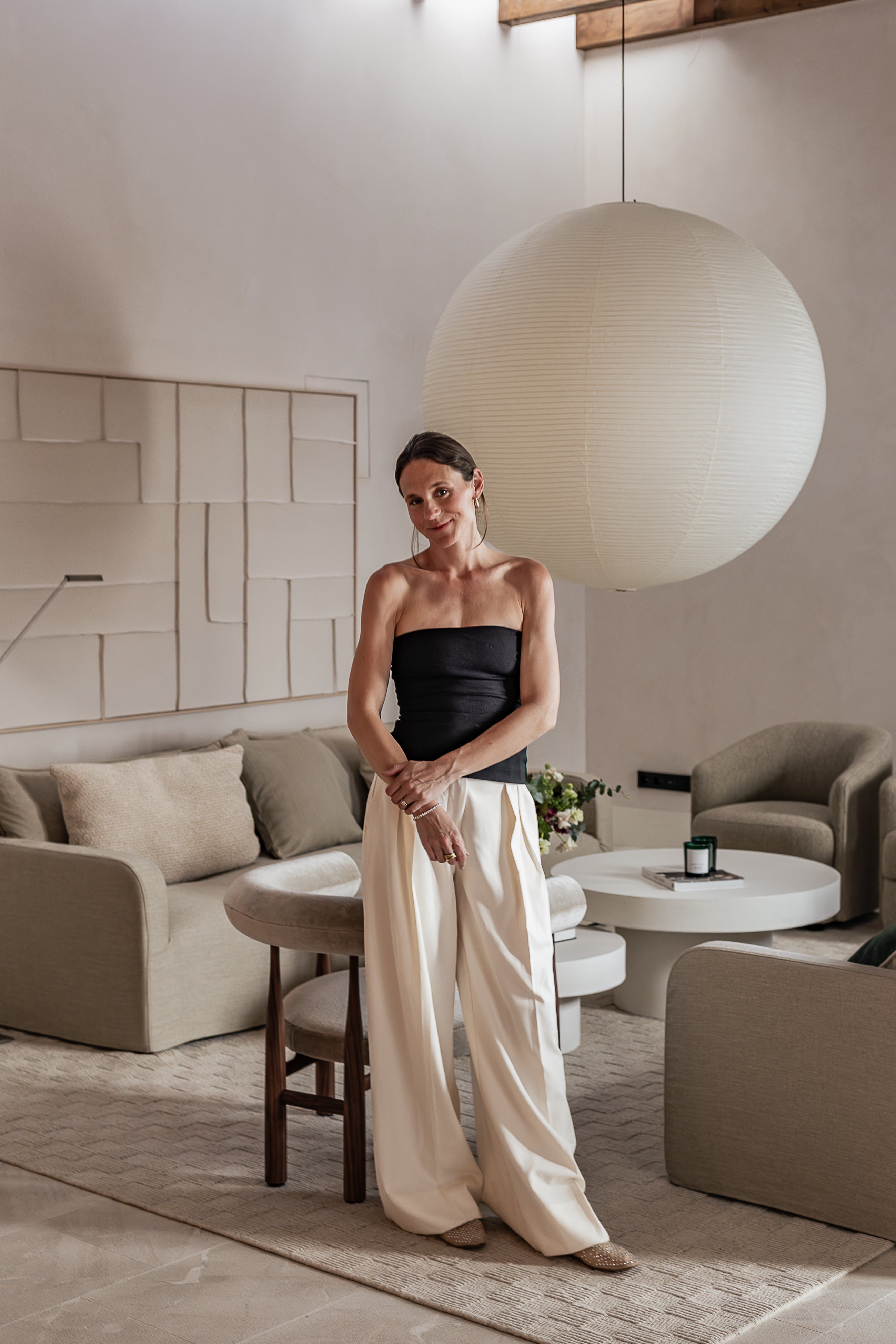
When Mathilda founded Juniper, she came from retail, not textile manufacturing. It started with a honeymoon trip to Mallorca in 2018, in a hotel room with sheets unlike anything she'd slept in before. Back in Palma, she asked what a set like that would actually cost, flew home to Stockholm without them, and couldn't stop wondering why that quality was reserved for hotel guests. What she found was an industry built on long, opaque supply chains, and a sense that there had to be a better way to do this.
So we started small, with one product and one promise: to trace it honestly, from seed to doorstep.
That one promise didn't stay small for long. Bed linens were followed by towels in 2021, then bathrobes, then silk, then a small line of fragrance for the home, each one held to the same standard as the first. It took four years, and a catalogue well beyond one product, before that standard needed writing down properly: not a single promise anymore, but a framework built to hold an entire range together.

The framework
One promise, grown into seventeen principles
Raw materials
Animal welfare
- Source materials that prioritise animal welfare, sustainability and ethics.
Biodiversity
- Reduce our impact on biodiversity.
- Make financial contributions to help protect it.
Production
Factories
- Only Tier-1 factories within the EU.
- Full accountability for Tier-2 and Tier-3 factories too.
- Champion fair pay, inclusion and diversity throughout.
Supply chain
- Never use air freight.
- Minimise logistical distance.
- Cut out unnecessary middlemen.
Packaging
- No conventional oil-based virgin plastics.
- Never overdo packaging for the sake of luxury.
Lifecycle management
Durability
- Design for maximum durability.
- Give care and revamping guidance to extend product life.
Climate
- Minimise CO2 emissions across our supply chain.
- Make financial contributions to climate-positive action.
Reusing & recycling
- Give returned products a new life.
- Guide customers on reuse and recycling at end of life.
Seventeen principles are easy to write down. What's harder is making them visible in the everyday decisions behind a product: the factory chosen over another, the material we ruled out, the details nobody asked us to add. A few of those decisions, and the principle behind each one, follow below.
Cotton, in practice
Cotton isn't the most sustainable fibre. We chose it anyway
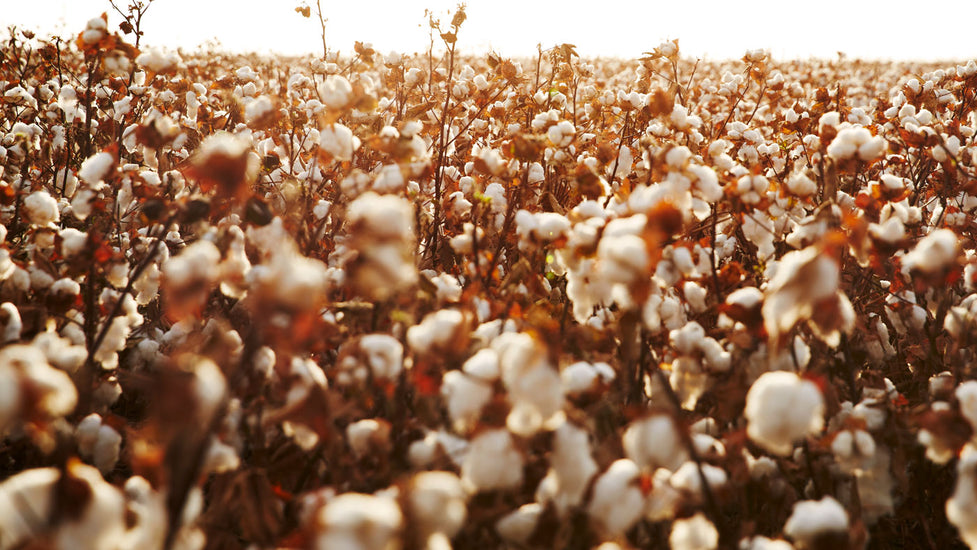
Cotton isn't the most sustainable raw material out there, and we won't pretend otherwise. But within cotton, Supima is one of the most responsible choices available: an extra-long-staple variety grown on around 500 family-owned farms, prized for a quality that lets a set last for years rather than seasons. And bed linens are about as good a product as that quality can go into: used for years, night after night, in a way few other cotton products come close to matching, clothing included.
Even within that choice, we push for less waste. By weight, the cotton fibre we actually use is only about 35% of the plant that gets picked. Everything else (stalks, stems, leaves, seeds) is captured during ginning and put to use, most of it as bedding for livestock. The seed itself yields cottonseed oil, valued precisely because it's flavourless, odourless and has a high flash point. By law, every field must be cleared of plant material at the end of harvest, so pests can't carry over into the next season.
Animal welfare, in practice
Leather, down and eggs would have been easier. We said no
As a home lifestyle brand, we're always evaluating the next product to add, and leather, down and eggs would be the obvious materials to reach for: leather for furnishings, down for pillow filling, eggs as a traditional soap ingredient. We've decided against all of them. Instead we let development take longer: researching alternatives, talking to experts and testing prototypes until we find a material we're comfortable with.
It's the same standard behind our silk collection, made from 100% mulberry silk: there we use the peace silk method, meaning the silkworms are left undisturbed to complete their full life cycle and leave the cocoon naturally, rather than being harvested inside it.
Factories, in practice
Why our bed linens are made in Porto, not wherever's cheapest
As a small company, our ability to regularly check working conditions across our factories is limited. So in 2020 we decided every Tier-1 factory in our supply chain would be an EU one, where worker protections are simply stronger. That meant finding a new home for our bed linens, in Porto, Portugal. It came with an added bonus: Portugal, like Sweden, has phased out coal power entirely.
We also require every factory partner to be transparent about which Tier-2 and Tier-3 factories are involved earlier in the chain, and we do our best to verify those too.
Traceability, in practice
A label that actually answers your question
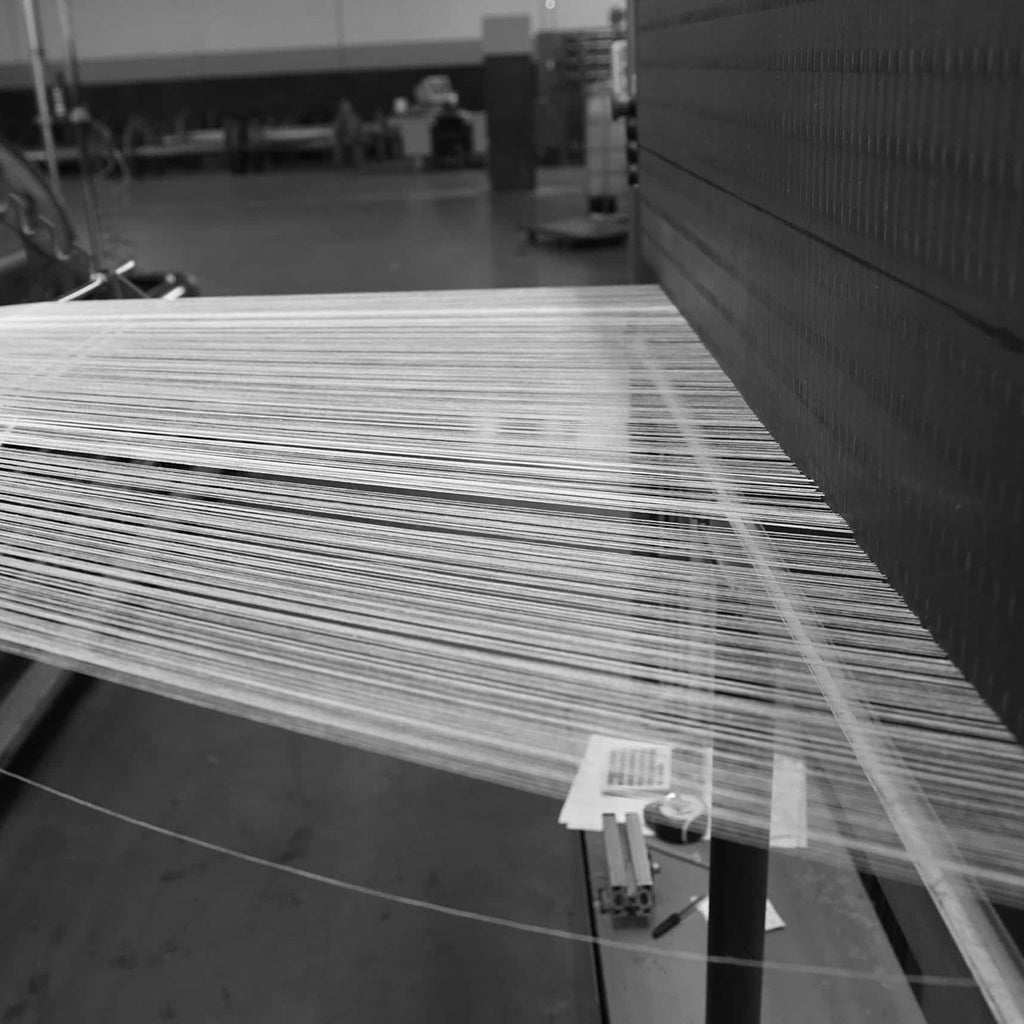
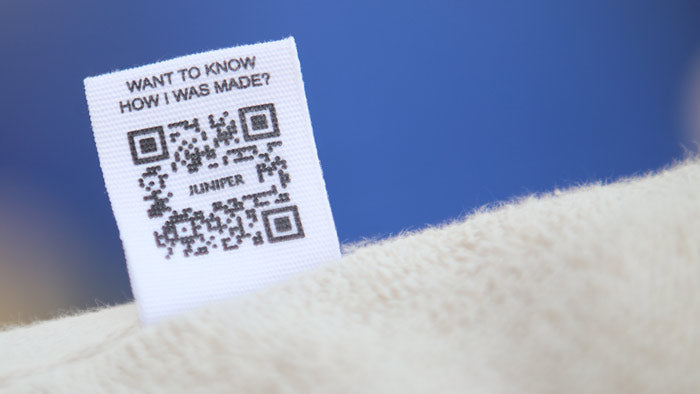
Every Juniper product carries a QR code on its Made-In label, tracing the same journey from raw fibre to your doorstep. We trace our own raw materials back through the value chain ourselves, stage by stage: fibre, yarn, fabric, finished piece. It's part of how we hold ourselves accountable to our 17 principles: not a promise made once, but a standard we keep checking our work against.
Supply chain, in practice
We'd rather you wait than fly it in
Global supply chains are hard to change overnight, but we can choose who we work with. We've committed to never using air freight, even when we're out of stock and could get inventory back faster by flying it in. Instead, we say so honestly on the site, and let you decide if it's worth the wait.
Packaging, in practice
Packaging that disappears in years, not centuries
Every product needs some packaging: to protect it from our factories to our warehouse in Jordbro, Sweden, and again on its way to you. We've never used conventional oil-based virgin plastic for it, and since 2021 every inner package has been 100% biodegradable. It costs a little more, but if one ever ends up where it shouldn't, it breaks down in about three years, not centuries.
Durability, in practice
A double stitch that adds years of use
Durability rarely gets talked about as a lever for sustainability, but it's one of the biggest: a product used for years instead of weeks makes a real difference (think bedding versus clothing, in hours of actual use).
It's why the first edition of our towels had a single seam, standard for retail, and the second edition moved to a double seam, standard in hospitality but unusual for a towel you buy at home. Our own factory thought it was unnecessary. We felt it was worth it to extend the product's life.

Always evolving
We won't call this finished
We don't think we've solved this, and we don't expect to. We keep pushing ourselves to do better, and we'd like to see the rest of the industry raise its bar too.